Thursday, April 5, 2012

Iron Reptile


Ask most Americans – most people in the industrialized world in fact – how ranchers go about the business of raising cattle in the 21st century, and most would imagine that the horse continues to play nearly the same major role in ranching today that it did at the turn of the 20th century. That romantic notion of the cowboy on horseback raising cattle on a sweeping, fenceless range is continually reinforced with the television airing of every Western ever filmed, and by countless books and magazine articles.

And while the horse and cowboy continue to be vital assets on a shrinking number of back-country ranches where their special abilities are absolutely indispensable, the reality of the situation is that the horse hasn’t been the backbone of most working ranches for a very long time. In fact, most horses are now owned by non-ranching entities – people or families who own one-to-several horses for pleasure rather than for work. Many of these folks own small acreages and even more 21st century horse owners board their animals.

There are a number of reasons for this change, but the main one is the internal combustion engine. Once the word got out that, in all but the roughest country, automobiles could be used to gather herds, the utility of ranch horses became questionable and the slow decline of ranch horse populations began.

Unfortunately for the romantics – and for many working horses – the advantages of the automobile mostly outweighed the advantages of the horse. The automobile, starting with the Model T Ford, was just as fast as the horse and in the hands of a skilled driver could be just as quick. The car required no hay or tack; no care other than topping off gas, oil and water, stayed where you parked it, was ready instantly when called on, could haul a larger load farther, and could take up tasks that the horse could not.

Over the years the Model T morphed into four wheel-drive pickups, powered three- and four-wheelers, and miniature utility vehicles, each of which has all the attributes of a powered automobile and can do nearly all the ranch work previously done by the horse.

Sigh.
Sunny, a 33 year-old EJE Quarter horse

The romantic in me can’t help but miss the horse. I grew up on a horse and worked cows on a horse and many of my fondest memories feature hard-working horses on the family ranch.

But the realist in me also recalls the misery of riding out in pouring rain and bitter cold, the long hours of eating dust in the drag, of brushing out and rubbing down at the end of the day while hunger gnawed at my guts, the thuds and falls and bruises of the morning “rodeo” required to work the frisky kinks out of my mount before the day’s work could begin.

Where romance meets reality the bottom line comes into play, at least if we plan a second century of raising cattle on the EJE. For our operation, the costs of keeping a working remuda employed outweigh the benefit. Our horses are in a state of permanent retirement. We’re glad to have them and they brighten our days, but they’re ornamental now, and mostly “just for lookin’ at.”

Last Saturday we had the task of moving a group of near-to-calving heifers from their winter pasture to the home-place calving paddock. The trip was six miles, and four of those miles were along a county road.
As seen from the saddle of the Gator, a group of soon-to-calve heifers move along a Kimball County road Saturday on their trek from winter pasture to calving paddock.

We set off, the Boss in his pickup and I in the John Deere Gator. Getting started was a matter of turning a key – there was no time spent gathering horses, brushing out, saddling, etc. At 45 mph, the trip from home to pasture took about seven minutes; by horseback the same trip would have taken 30-45 minutes. The gather was swift as well, and the Gator negotiated the rough spots with ease. Trailing the heifers home took longer, of course, because we moved at the pace of the heifers. Being young animals they left the county road often to explore stubble and dormant wheat along the way, but the Gator had no trouble negotiating roadside ditches clotted with snow and the heifers were returned to the road every bit as easily and quickly as they could have been by horse and rider. At the end of the excursion we turned the heifers into the calving paddock and parked the vehicles. Job done.

The Gator is a fantastic ranching utility vehicle. At calving time its low profile, lights, and very quiet engine make it the perfect choice for checking cows. There’s plenty of room to carry supplies and the seat has plenty of room for a helper. When it comes to fixing fence the Gator is in many ways superior to a pickup. It can carry plenty of supplies while negotiating fence-lines a pickup simply can’t reach. It has four wheel-drive, a low-range gearbox, and a locking differential. It can get in and out of remarkably tight places, and its low-pressure flotation tires don’t disturb the grass. The Gator is even light enough that I can lift and shift it by hand on those rare occasions when I blunder my way into being stuck. It’s no feather, mind you, and shifting it takes effort, but I can still get it done.
A comfortable cockpit with plenty of room for gear, including a rifle, rucksack, and even a GPS.

If I seem to be singing the virtues of the Gator to the detriment of the horse, I don’t mean to. It’s just that I’ve found the Gator to be more useful in my particular ranch application. Were the terrain on the ranch a bit rougher, and were it forested with closely spaced trees, a horse would be indispensable.
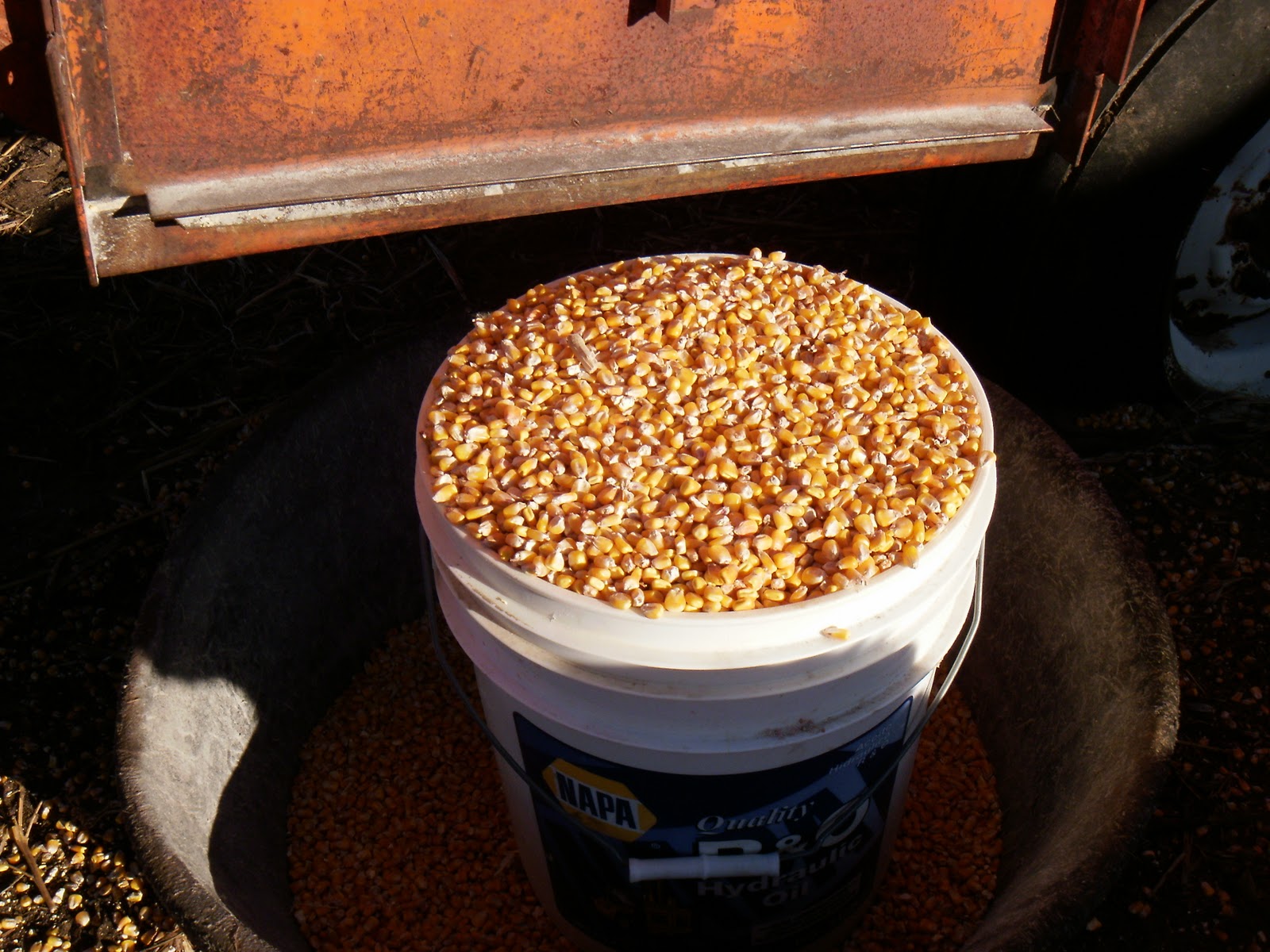
While the horse munches her morning corn, the Gator is fueled, loaded, and ready to check cattle.

But that’s not the case on the EJE, and I’ve found that the utility of the Gator far exceeds the utility of a horse or even a four-wheeler. And at the end of the day, the Gator is safer, too.

In my perfect world, the horse would be the go-to vehicle. But that perfect world would have no deadlines and require no quick trips to town. I’d also be wealthy enough to employ a wrangler to keep my remuda in shape.

In my real world, I’m glad to have a Gator. It fits my needs and makes my life a lot easier.

And whenever a beautiful day comes along with a hole in the schedule and the excitement of nieces and nephews to drive an adventure, we can still slap leather to a few horses and play at being cowboys. Maybe even get some useful cow-punchin’ done, too.

Tuesday, December 20, 2011

Alright, we both knew I was going to do it...


At some level, I can't help myself. I'm in love with the English language, with lyrical prose, with attempting to employ those things to share the experiences I love. Perhaps that indicates only that I'm in love with myself; with my thoughts and my deeds and my words and my world view.

Stephen King (and about a zillion other successful writers) says that one should write for (to?) the ideal reader; an imaginary construct representing not only those you are writing to, but those you are trying to give the experience of joyful reading.

My ideal reader is a fuzzy, ill-defined construct at best. It might even secretly and subconsciously be me. Ah, nothing like pondering the unknowable. But I digress. 

I’ve written about this subject before.

Five years and some months ago, as weather autumn ended on an especially lovely October Saturday and winter arrived in the night with cold and snow, I shared the experience in a column in a different newspaper. The opening line of that column was, “Every season has a last, best day.”

Light and shadow cast by High Plains December sunlight
This year autumn seemed to linger here in my part of the world, the southwest corner of the Nebraska Panhandle. Oh, we’ve had a taste of winter – the sub-zero temps and snow of early December – but in the main our 2011 fall has been extended, dry and balmy.

Winter weather usually arrives here before calendar fall expires. In itself, that's little different than anywhere else in our hemisphere, at least north of the tropics. The farther north you go, the earlier winter arrives and the longer it lingers into calendar spring. Our planet’s weather doesn’t seem to care much about our calendars, though in a a lovely and ironic twist, we rely utterly on nature – the celestial mechanics of Earth’s axial tilt and it’s orbit around the sun; the moon’s orbit around our planet – to write our calendars.

On Sunday, with the shortest day of the year rapidly approaching (winter solstice will occur at 10:30 p.m. MST tomorrow, Dec. 21), one would normally expect the weather conditions to be cold and windy, with perhaps even a lot of snow on the ground.

But Sunday was absolutely gorgeous. It was warm, the sky was deeply blue with only scant, fleecy cloud cover, the ground was mostly clear of snow, and a light southerly breeze was wafting gently across the prairie. It was definitely time for a hike. Having been laid low with a month-long cold and an injury to my yet-to-be repaired starboard calcaneal Achilles insertion, I’d been gimping and wheezing around for far too long.

I prepared carefully. Hiking the prairie in December is potentially dangerous, particularly in and around the rock-strewn gullies I love to explore. Snow and ice lurk in the permanent winter shadows, and where the season’s slanting sunshine does fall, thin mud layers form atop frozen soil. A wrong step on treacherous ground can lead to a slip, fall and tumble – and potentially – a mobility reducing injury. An injured, immobile hiker will be in big trouble when the early sunset allows the true, cold character of the December prairie to reassert it’s iron grip.

For a prairie hiker, one who relies on his feet to get him in and get him out, boots and socks are of penultimate importance. I wear Ingenious socks and Danner boots. They’re top of the line and priced accordingly but, oh my, are they ever worth the cost.

I double-checked my rucksack to ensure the appropriate survival gear was there; first aid kit, fire starter, hard candy, spare water, a hand-cranked emergency cell phone charger. I added a sealed bag of dry clothing, a trio of insulating poncho liners, and extra gloves. The additions boosted the weight of my ruck to 51 lbs, a not inconsiderable load for a 50 year-old hiker.

I grabbed my rifle, pistol, GPS hand held and camera and headed out.

Why carry the shootin’ irons? There are a number of reasons. First and foremost, while the Second Amendment to the Constitution of the United States guarantees me the right to keep and bear arms, it does not spell out the ethical responsibility of owning and operating a lethal device. That's on me. I take it seriously. The skill set required to carry and use firearms, including the rigor of a maintaining a responsible mindset, requires practice. Every thing I do on a hike is predicated on weapon safety and discipline. Another reason is that the rifle and pistol and their ammunition, like the bulging rucksack, increase the load I carry, and that increases the exercise quality of my hike. I could carry rocks and a crowbar for exercise enhancement, but I’d have to give up the discipline of responsibility. Bad trade. Finally, I might have to employ my weapons in their lethal capacity. The chance of such a thing happening is tiny, but a weapon locked up miles away is useless should such a situation arise.

Shouldering my rucksack and taking up my rifle, I set out. Muscles and joints complained at the unaccustomed load and my foot-eye coordination was terrible. I kept stepping on small rocks and other foot-twisting features of the prairie landscape. My heart began to hammer and my ragged breath was that of a fat old man struggling up a short flight of stairs. I was anything but agile, nor were my efforts worthy of the beauty of the day or the joy of the task.

But slowly, oh so slowly, my mind and body responded to the challenge. After the first mile my tread became sure and steady, as my feet coordinated with my peripheral vision. My heart rate stayed up but my breathing became even and smooth. The cool air flowing in and out was, as always, a wonderful sensation. The slanting rays of December sunshine were warm and comforting and the sweat of exercise flowed freely. I began to revel in every moment. In my world, this was living.

High Plains December sunlight has a nearly Mediterranean quality
There was precious little green in the landscape, and what there was came mainly from fading yucca. But on closer inspection, there was still active chlorophyll at the base of many grasses and forbs. Above ground level though, the prairie wore her autumn coat; dull and whitish-brown, yet gloriously beautiful as it glowed with feathery brightness in the slanting sunlight. The air was clean and clear and devoid of any smell, the fading season having driven away the fragrances of fall – sumac and stink grass and sage. Insects were absent from the scene, as were birds of prey, though sparrows and larks abounded.

As I hiked and breathed and poured with sweat, the peaceful beauty I’d been unconsciously craving began to steal gently into my heart. The frown of human concerns vanished from my face, replaced by a giddy, happy grin. An intense joy bubbled up from deep inside. I knew with certainty how indescribably blessed I was to be there, to bear witness to the natural beauty surrounding me.

I thought about the lines I wrote five years ago. Was it indeed the last best day of the season? Who knows? Who cares? It was or it wasn't. Naming the day isn’t important, and neither is predicting the future. I was there to witness the moment, to sop up every bit of the wonder I could hold. Being part of the here and now is far more significant, far more fulfilling than self-absorbed speculation. Being in the moment, unbound by yesterday or tomorrow, is potent medicine.

And it’s amazing medicine. I walked an uneven prairie at age 50, gimpy with a painful injury but alive and kicking nonetheless. The pain was distracting but vital, a component of experience and a tool to remind me that I’m mortal and limited. I won’t always be here, but I was still there on Sunday. I breathed deeply and easily, my heart sent blood coursing through my veins, I bore the pain. I was far, far from my mortal limits, the pain a gift, and very small compared to the pain endured by others.

I stopped and slowly turned around, drinking in a complete prairie horizon and soaking up the soft autumn light. Peace. It may have been December, with the discomfort of cold winds on the near-future weather menu, but those things were not there in that moment. Re-centered, I could go in beauty. It was enough. Perhaps it was everything.

I climbed to the top of a steep hill and took in the view. To the north and south, wind turbine blades slowly rotated far away, on the edge of the world. I dropped my load and sat, leaning back against my rucksack, rifle across my knees. The breeze was cooling, evaporating moisture from my sweat-sodden clothing, causing the beginnings of a shiver. A muted growling of high bypass turbofans tumbled down from the sky. The contrails were far overhead, stark white lines across deep, towering blue.

As evening came on and the air quickly cooled, I watched clouds begin to creep in from the west. The bright, white sun went first orange, then red as it neared the horizon, painting the southwest land and sky with glowing sunset colors.

As the cold crept in it became time to go. I donned a sweatshirt and light gloves and took up my ruck and rifle. I’d come four miles and the same distance would return me to my parked pickup. As I set off, I realized the pain and swelling had increased in my right foot. Perhaps I’d overdone it a bit, but I doubt I’d caused any additional injury. As I moved and stretched muscles and joints and regained my hiking rhythm the pain receded to a dull ache. After a time I returned to my starting place and the GPS confirmed the distance traveled at just over eight miles, with a cumulative elevation change of nearly 6,000 feet over that distance. Who says Nebraska is flat?

As I drove away I murmured a prayer of thanks for the day and the experience. Without a doubt, I am profoundly blessed.

Monday morning the world had changed. It was cold and damp with fog and freezing rain in the air and ice on the ground. The horizon was close and tight and gone were the long vistas of yesterday. I shivered in the freezing damp as I fed calves and chopped ice. A light snow began to fall, and snowflakes gently dotted my face with gossamer kisses. In the still, bovine-tinged air, the crunch of chewing corn came clearly across the feedlot. Light snow began to coat the backs of the calves as they stood lined up at their breakfast table.

The prairie I hiked Sunday was hidden from view now, hushed and hunkered down, waiting. Winter is coming, bringing ice and snow and bitter cold. But right there, right then, the day was sweet.

Every season has a first best day.

Sunday, December 18, 2011

Words aren't enough

The temperature hit 60 this afternoon (Dec. 18), less than 80 hours before calendar winter begins with the solstice. I hiked six miles across the shortgrass prairie in this balmy weather, and I'd love to describe the beauty of the experience to you. But I can't. The right words haven't yet been invented, nor am I a good enough writer. These pictures will have to do, but they only nibble at the edge of actually being there. My life is incredibly better than I deserve. Click the images for a larger view. May each of you have a surfeit of days of joyful wonder.

Me an' my shadow

Spent Tenpetal Evening Star, Mentzelia decapetala

Someone forgot to police up his brass

Light, shadow, sky, water

Stuff of life

Sun, water, ice, carbon

Where are the polar bears?

Sweeter than champagne, and even (temporarily) bubbly

Warning, treacherous footing here

Backlit grass seedpods

No sun all winter = deep freeze

Lichens thrive

Grass, yucca, snow, sky, clouds, sunshine

Spent Stemless Hymenoxys, Hymenoxys acaulis

Sun-kissed late-autumn prairie

Old bower in leafless sumac -- baby birds raised here in the spring

The reason I can hike here

Thursday, December 15, 2011

cow thinking


If you’ve ever owned or worked around cattle, you’ve probably had occasion to wonder what they’re thinking.

What is this heifer thinking as I capture her image?
For instance, we’re backgrounding two pens of calves on the ranch this year. Each morning – and most evenings – when I feed them their grain ration, there are three calves outside the west pen. It’s always the same three calves.

Is this calf thinking of escape? Wondering if feed is going to appear like it did yesterday morning? There’s plenty of room for her to squeeze out of the pen, but is escaping even a consideration for her?
“Hey, look! The corn’s back!” Human thinking. Not bovine thinking. Loose cables on the feed rack, too.
I know how they get out. There are a couple of loose cables along the feed rack, and they simply inch their way through the loose spots as they try to find one more morsel of corn or bite of hay. Little by little they push their way through. First the head, then a foreleg, then another foreleg, and hey-presto, they’re through the feed rack, on the outside looking in. So to speak.

They’re not trying to escape. They never stray from their pen-mates, nor from the feed rack, where they continue to placidly feed, nose to nose with their fellows. They’re comfortable in the feeding pen. They’re with their peers in a mini-herd, there’s plenty of food and fresh water close at hand, they have shelter from the cold December wind and plenty of warming sunshine, and there are no predators to be found.

Returning the three amigos (amigos y amiga, two steers and a heifer) to the pen is a breeze. I simply open the gate and get out of the way and they file back in, usually kicking up their heels and seemingly pleased to be back where they belong.

I can’t help but wonder why, if they want to return to the pen and their pen-mates, they don’t crawl back in the way they crawled out.

Calves tucking into their morning ration.
But that’s human thinking, and when I apply it to the three amigos, I’m anthropomorphizing their behavior, thinking of them as creatures who possess the same thinking and reasoning set that I have. I’m humanizing them, to use a less scientific word.

It’s something we all do, to a greater or lesser extent. For an over-the-top example of anthropomorphizing non-human creatures, check out the web-sites of PETA or the Humane Society of the U.S. (HSUS) and see what they have to say about farm animals. Ingrid Newkirk, the founder of PETA, famously said “A rat is a pig is a dog is a boy.”

In the sense that rats, pigs, dogs and boys are living organisms, she’s right. And I agree completely with both PETA and HSUS that animals should always be treated humanely. Of course, plants are living organisms, as are bacteria, biting flies, disease-laden mosquitoes, rattlesnakes, dust mites, cold and flu viruses, city pigeons, zebra mussels, flying carp, cane toads, etc. By Newkirk’s reasoning, surely these organisms deserve human rights as well. The phrase “hoist on her own petard” comes to mind.

We differ completely, however, on the definition of humanely.

By humanely, PETA means human; that all animals are endowed with the same fundamental rights as people. HSUS is no different, though they come across as less radical. Both PETA and HSUS profess to believe that humane treatment means giving all animals basic human rights and allowing them to live completely wild, natural lives. But why not plants, pathogens, and bugs? Why not dangerous or “icky” animals? One can argue that rather than providing for animal rights, PETA and HSUS are far more interested in exercising control over people.

Agricultural producers, and most reasonable people in general, do not believe that animals are human and are somehow deserving of basic human rights. They do believe that livestock and wildlife should be husbanded, though. That is, mankind should respect animals and ensure that they are cared for or managed in the ways that suit their different natures.

When it comes to food animals, this means seeing to the health needs of livestock through preventative health programs and veterinarymedical intervention when animals become ill. It also means keeping livestock well fed and watered, sheltered as necessary, and humanely slaughtered when the time comes.

When it comes to wildlife, this means population control through hunting, to stave off overpopulation and starvation, as well as habitat management.

The difference in the two approaches lies in the basic assumptions we make about the nature of animals. PETA and HSUS, as well as millions of non-activist people, anthropomorphize animals. A few do this in the extreme, but most humanize animals to a lesser extent.

Pet owners are a good example. Most think of their pets as members of the family, and most tend to treat their pets as nearly human – talking to them, ensuring that they have adequate (sometimes elaborate) nutrition and shelter, and seeing to their health needs. Some pet owners spend thousands or even tens of thousands of dollars on very high level veterinary care such as advanced diagnostic tests and surgeries. But nearly all pet owners, even though they genuinely love their animals and tend to think of them in human terms, understand that they are animals and not people. They feel a big responsibility to care for their pets, and struggle mightily with emotion-laden end of life issues. But when their pets are suffering, be it from the infirmities of age or from disease or accident, and recovery is unlikely, most choose to have their pets put down. It’s the humane thing to do.

They, like you and I, would never have Granny euthanized because of old age, nor a sick or injured family member, no matter how dire the circumstance or how poor the prognosis.

We recognize the fundamental difference between humans and animals.

But many others struggle when it comes to understanding the basic differences between people and pets – and by extension – other animals. As the world-famous “Dog Whisperer” Cesar Millan famously said, “The most common mistake in America is that we humanize dogs. There's nothing wrong with loving a dog like a human, but it's important for them to become dogs first and become fulfilled as a dog. I rehabilitate dogs, and I train people. That's what I do.”

Here is where a problem lies for livestock producers. Because there are so few of us, we find it difficult to get our animal husbandry message out to the population at large. We are at most two percent of more than 300 million people. The animal rights activists are organized and well funded, and they flood the media and airwaves with anti-livestock production propaganda. The 98 percent of Americans who’ve rarely, if ever, set foot on a farm or ranch feel a tug on their heartstrings in response.

But most, as I’ve noted, understand the fundamental difference between animals and humans. Most understand the utility of food production, which they depend upon for survival, and most enjoy and embrace the availability of safe, abundant, and nutritious meat.

What they don’t understand is the level of  respect shown to livestock by producers, feeders, and processors. For the producer, this respect is quite similar to the feelings pet owners have for their dogs, cats, and other pets. The vast majority of producers care deeply about the well being of their livestock and take seriously their responsibility to husband their herds. Though there are still some in the food animal industry who do not care about or who mistreat livestock, and a few examples get wide play in the media, these people are a tiny minority and do not represent the industry as a whole. Just as the murders and child molesters covered extensively by the media do not represent humanity as a whole.

The livestock industry is slowly getting better at getting their positive message out, but it will be an ongoing struggle. We are so few, and the people we feed – who are mostly two or more generations removed from the farm and ranch – are so many.

Producers should try to keep this in mind as they interact with their non-ag friends, neighbors, and visitors. And they should consider showing off their operation when the opportunity presents itself. As is often said, seeing is believing, and visitors will go away with a new appreciation for the livestock producer and the way he cares for his animals.

And yes, I’ll be tightening the cables at the feed rack. Probably tomorrow.

Tuesday, December 6, 2011

Pressure dancing


If you’re a regular reader of my columns, you’re probably surprised to see the word ‘dancing’ in the title of this piece.

And I am such an unskilled, inexperienced dancer that I’m probably violating federal regulation in writing about it.

But have you ever heard of pressure dancing?

Pressure dancing is the phrase that comes to mind when I think about low-stress cattle handling.

Low-stress cattle handling is like a dance. The handler leads, the cattle follow. The handler guides, the cattle respond. They dance across square miles of prairie rather than square feet of ballrooms, communicating and coordinating their movements in a choreography unlike anything most people have ever seen.

Cattle are herding prey animals. They congregate in herds, and with eyes located toward the sides of their heads, they have a wide field of view and very acute, dichromatic distance vision. This makes them very good at spotting potential predators.

To the human eye, it’s easy to tell the difference between the substance of this cattle chute and the shadows cast by its various components. To a cow, however, equipped only with dichromatic vision, the difference isn’t so clear.
The way they respond to potential predators is the key to cattle handling in general and to low-stress handling in particular.

Cattle don’t automatically flee potential predators. If they did, they’d be constantly galloping across the landscape. To a cow; a fluttering plastic bag, a man, a pickup truck, a bear, a wolf – all are potentially predators at first sight.

Rather than flee at first sight, cattle assess the threat level and behavior of potential predators before taking the action they deem appropriate to remain relatively secure.

If a potential predator is spotted at long distance, cattle will simply keep an eye on it and wait to see how things develop. They’ll also alert the rest of the herd to the presence of the potential predator through visual, rather than audible, communication.

This communication system is nothing more than body language, but it’s intricate and complex. In fact, for those who’ve studied it, it’s in many ways quite beautiful. A change in posture. A slight raising or lowering of the head. A particular switch of the tail. A quiver of musculature along the back or flank. The flicker of an ear. It looks meaningless, even superficial. Yet those cues can alert in moments every cow scattered across a square mile, turning their attention to a single object faster than you can scan the horizon.

Familiarization with such ‘cow talk,’ with those visual cues, is a big part of low-stress handling. It’s part of what’s called “reading” cattle. It takes time, study and experience to even begin to be able to read cattle.

Another important part of reading cattle is understanding that while they’re instinctive herding animals, the herd isn’t a homogenous unit made up of identical parts. Cattle group together for many reasons, including for the level of individual safety that comes with numbers. But even though they group together as a collective herd, each animal is an autonomous individual. This is a critical thing to understand.

The low-stress cattle handler understands most of the how and the why of cattle behavior, and is familiar with (though not fluent in) their body language form of communication. The low-stress handler uses this knowledge to guide, rather than drive, cattle.

Guiding cattle works through the application of mild, indirect pressure -- by moving inside the animals’ comfort zone. When the herder violates the comfort zone, the cattle respond by moving away from the herder until they’ve reestablished their comfort zone. If the pressure was mild, the cattle move slowly and calmly. If the pressure was too vigorous, the cattle flee.

Cattle, both as groups and as individuals, have different sized comfort zones, depending on the situation, just as people have different comfort zones under different circumstances. For instance, you might feel perfectly comfortable sitting next to a complete stranger in a movie theater, yet be very uncomfortable if the same stranger stood as close to you in an empty parking lot. In the theater, you would stay in your seat. In the parking lot, you would move away from the stranger.

When moving cattle in an open field, say from pasture to a set of corrals, the low-stress handler places himself so that the cattle are generally between himself and the ultimate destination. He then moves back and forth in a line perpendicular to the direction he wants the cattle to move in. While moving back and forth, he crosses through the comfort zones of individual cattle, who respond by moving away from the handler and toward the destination.

Initiating herd movement in this fashion can be done on foot, from horseback, from a pickup truck, or from an ATV. “Reading” the cattle’s body language tells the handler how close to come and how quickly to travel. A well-trained handler can corral all but the wildest herd of cattle by himself and on foot, even if those cattle are spread out over a square mile or more. He has only to read the cows and apply appropriate pressure. Of course, he has to be willing to spend the time and walk the not-inconsiderable distance required.

“Pushing” the cattle by moving too quickly or by pushing too far inside the comfort zone will cause the animals to “raise the threat level” and become excited or stressed. It takes time and experience to learn where the line is drawn between guiding and applying stress. One useful tool is called the “rule of stop.” To put it simply, if an animal stops, turns sideways toward or looks directly at the handler, it’s time for the handler to stop and wait while the animal(s) adjust their positions relative to the handler back to a comfortable one.

The same rules generally apply when working cattle in a corral or pen, with a few minor differences. Comfort zones are smaller in a confined area, but the cattle are more sensitive to comfort zone violations. This is where reading body language, having the patience to take your time,  and heeding the rule of stop can make the difference between quietly sorting cattle or having a full-fledged rodeo. Again, it takes time and repetition to develop reading skills.

Another couple of things to keep in mind. In general, cattle only vocalize when under some form of stress, whether it’s a cow searching for a lost calf or an animal actually being predated. They don’t often communicate vocally, nor do they like loud noises, which they usually take as evidence of a dangerous threat. Therefore, yelling or whistling to move them isn’t a very good tactic. They may indeed move away from the sound, but they’ll be more stressed.

Occasionally it’s appropriate for the handler to vocalize, and this is generally when working a group of cattle in the confined area of a pen or corral.

As we noted before, cattle have a wide field of view, about 340 or more degrees, and possess excellent dichromatic distance vision. This is in part due to the wide spacing of their eyes, and it’s a fantastic tool for a herding prey animal to have. But it comes at the cost of poor near vision and depth perception. In a crowded pen or corral, individual cows can lose track of the handler, even when the handler thinks he’s in the plain sight of the animal. With enough experience, a skilled handler can read by a cow’s body language whether or not they can see him. The important thing to remember here is that if the animal has lost sight of the handler, she can easily be startled when she suddenly “spots” the handler, particularly if he’s well inside her comfort zone. This will not only increase stress, but is likely to induce a flight reaction. The cow may try to crowd in with others, jump a fence or charge a gate, or if she feels trapped, she may try to run right over the handler to escape the immediate threat and reestablish a comfort zone.

Therefore, in a close environment where one or more cattle may have lost sight of the handler, it’s appropriate for the handler to advertise his presence vocally by keeping a patter of talk going. It doesn’t matter want the handler says, but it’s important how he says it. His cow-talk should be in a low key monotone. Something like, “Okay girls, you’re all fine, just me back here, nothing to worry about, I’m just going to move over here a bit…” You get the picture. This kind of low key vocalization allows the animals to be aware of where you are, and how close, even if they’ve lost sight of you. Therefore you can nip a potential stressor in the bud by just talking quietly.

Finally, and back to vision again, I’ve noted above that cattle have dichromatic vision, poor near vision, and poor depth perception at close distances.

Dichromatic vision simply means that instead of seeing in three main colors like we do (red, green, and blue), cattle see in two main colors (yellowish-green and blue-purple). Combined with poor depth perception and near vision, confined cattle have trouble telling light, shadow and reality when it comes to corral fences and gates. Where there is strong sunlight and shadow present, they often miss open gates and try to cross through solid panels or closed gates. When they see a dark blob on the ground, they can’t tell weather it’s a dangerous hole or a shadow. The key to low-stress handling in these situations is patience, provision for good lighting and shadow elimination to the extent possible, and backing out of the animal’s comfort zone until they’ve found a path that feels safe to them.

Is that a shadow on the ground or hole you might step into, causing you to break your leg? You and I can easily tell it’s a shadow, but a cow, with her poor near-depth-color vision can’t really tell the difference.
One final thought – cattle can definitely sense your emotions. You are in charge, and if your can’t be calm and professional when working your cattle, you might as well give it up for the day until you can control your emotions, or hire cattle handlers who can control their emotions and be professional.

By the way – I may have coined the term “pressure dancing.” I can’t seem to find any citations on the internet.

##########

Be well and embrace the blessings of liberty


Thursday, December 1, 2011

Close, but no disaster


I can reel off dozens of reasons I love being a fourth generation rancher.

I grew up in the EJE Ranch south of Kimball, Neb., and from the earliest age I can remember, I got to explore the entirety of the ranch, both alone and with brothers and friends. Over the last 50 years I’ve become intimately familiar with the landscape in all seasons, in good years and bad years, on the most beautiful days imaginable and under the harshest conditions the High Plains can dish out.

That long-term relationship (which included twice-yearly working visits while I served in the navy) is among the top reasons I love what I do.

There are many others, but I don’t have time or space this week to do them justice, and I don’t want to produce some ridiculously inane top-ten list.

But at the top of the list – by a wide margin – is the fact that ranching drives humility deep into the core of my being. With a very big hammer. That’s simply the way it is.

I feel pretty good about the quality and quantity of my ranching knowledge. Not very many people can ask me a ranching question – no matter how detailed or arcane – which I cannot answer with relative ease.

Nevertheless, very few days go by when I don’t learn an unexpected lesson. A good, solid, valuable lesson.

I hauled bred heifers to winter pasture last Thursday. There were only 24, so three trips with the stock trailer did it.

And I did it the right way. I checked the pickup and trailer when I hooked up. Engine, fine, pickup and trailer brakes fine, lights working correctly. The tires on both pickup and trailer were inflated properly and had no obvious nicks, cuts, or wear. Good to go. Though my dogged attention to detail has been known to drive people to distraction, there’s a real upside to the navy training that taught me to take care of my equipment and pay attention to detail. After all, I’d be transporting $12,000 worth of cattle on each trip.

As those of you who’ve read my columns on low-stress handling can attest, it’s a method I believe in and use. So loading the rarely-stressed, calm cattle, eight at a time, was an easy one man job.

And all went well on the first trip.

When I came home to pick up the second load, I backed the trailer too quickly and bumped the rear door frame against the loading chute, bending it enough to make sliding the door closed a problem. Not an insurmountable problem though, and I managed to close the door.

The remainder of the second trip went well. After unloading the heifers, I decided to fix the bent door frame using the time-honored sledgehammer technique. I left the rear door closed, climbed inside through the side door, and soon had the frame straightened and the door sliding like new.

I flew back home, loaded the last eight heifers, rechecked the tires and connections, and headed back to the winter pasture. As I arrived and drove through the gate, a flash of movement in the right-side mirror caught my eye.

It was the trailer side door swinging open. The one I had forgotten to latch after fixing the bent door frame.

I was initially terrified. I could picture eight crumpled heifers in my mind, spread out along the road, battered, broken, and surely dying.

I quickly jumped out of the pickup and latched the door, relieved to find that there were still eight heifers aboard.

After dropping them off I could only scratch my head in wonder. How could it be that they hadn’t simply walked off the trailer as I loaded them? Why didn’t they jump or fall out during the jostling of the trip? How could I (and the heifers) have been so lucky? And perhaps most importantly, how could I have been so dumb?

I don’t know the answers to those questions. Coincidence, lucky break, smart cattle, divine intervention? Maybe all of the above.

Everything worked out in the end, which is important.

But pulling a boneheaded stunt like that was a very humbling experience.

Those experiences seem to happen when my hat starts to get too small. I know a lot, but there’s a big difference between what I know and what I think I know.

And that’s a darned fine lesson.

Wednesday, November 30, 2011

The AND and two-stage weaning


Originally posted November 30, 2011; updated July 24, 2022. We used this weaning process on the ranch from 2010-2018. It worked very well, helping us to maximize both profit and the well-being of our cattle.

##########

This year marked the second consecutive year in which a low-stress approach to weaning has been used on the EJE Ranch south of Kimball.

Traditionally, cows and calves have been physically separated at weaning time, often with the cows returning to pasture and the calves leaving for market on a truck.

Abrupt separation and relocation is a high-stress evolution for both cow and calf, leading to reduced feed intake in both and a sharply higher rate of illness in the calves, particularly Bovine Respiratory Disease (BRD), routinely called pneumonia or “shipping fever.”

The impact of these stressors hit the producer square in the pocketbook. Cows which are abruptly separated from their calves and subsequently “go off feed” for a few days are shorted on nutrition at a critical stage in the gestation of the new calf growing inside them. This can result in smaller, less vigorous calves at birth or even loss of the calf through spontaneous abortion or stillbirth. Troubled pregnancies can also mean reduced conception rates in subsequent years. Also, a cow going into winter requires a solid body condition, and missing a few days of grazing can melt flesh away quickly.

Calves which sicken after weaning don’t do as well at the market, costing the cow-calf producer the premium he’s worked so hard for. Calves which succumb to BRD either make the producer no money or gain him a reputation for producing “iffy” calves – those which require doctoring at the feed lot and seldom catch up with their peers in adding flesh or grading well.

Reducing the stress of weaning – for both cow and calf – makes a lot of sense. Countless studies conducted over the years have shown that reducing weaning stress correlates very well with healthier, faster gaining calves, and healthier, better conditioned cows that tolerate winter better, produce more vigorous calves, and have higher breed-back rates.

The cattle industry has been somewhat slow in adopting low-stress weaning, and probably for a number of reasons. Firstly, the “old” or “usual” way has always worked. Secondly, the expenses and physical work are borne solely by the cow-calf operator. And thirdly, while many cow-calf operators like the idea of low-stress weaning, the additional supplies, attention to fencing, and the time spent planning and then executing the plan often seem like a few too many extra tasks to producers who are already task saturated.

There is more than one way to reduce weaning stress. Two of the most popular are fence-line weaning and two-stage weaning.

In fence-line weaning, the cows and calves are separated by a fence. They can still see, hear and smell each other and spend time in close proximity. Depending on the design of the fence, cows and calves can even make physical contact through the fence. The fence has to be exceptionally strong and tight to prevent nursing, and a fact of life is that both cows and calves can work their way through surprisingly tight fences. Most often, fence-line weaning merely reduces nursing, rather than eliminating it. In many ways, reducing nursing is almost as useful as eliminating it, and given time, complete weaning will eventually happen. So for a producer who can spend 30-60 days weaning calves, and who is willing to spend the time and effort to re-separate pairs who get through the fence, this is a great option.

Few cow-calf producers can spend that much time on weaning, however. The calves have to go to market, to a feedlot, into a backgrounding program, or out on autumn/winter grass. Cows need to stop lactating, which uses significant energy, and devote that energy to maintaining condition and growing next year’s calf.

A big heifer waits in the chute Saturday just prior to receiving her anti-nursing device during annual weaning on the EJE Ranch south of Kimball, Neb.
Another heifer with her newly-applied anti-nursing device. The anti-nursing device prevents nursing by pushing the teat away when the calf tries to suckle. The devices are left in for 4-7 days, then removed when the cows and calves are separated.

This is where two-stage weaning has an advantage.

A steer calf with a newly attached anti-nursing device just after being turned back in with the cow herd.

In the first stage, a plastic anti-nursing device (AND) is placed in the nose of each calf. The devices are small plastic tags which fit into the calves nostrils and hang down over their upper lip like a moustache. This can be done while the calves are in the chute to be weighed, vaccinated, and otherwise “worked.” The calves are then turned back with the cows. As the calf tries to nurse, the AND pushes the teat away from the mouth, making suckling nearly impossible. The device does allow the calf to graze and water normally, however. The cows and calves still have close contact and can nuzzle, reducing stress for both. As the first stage progresses, the cows and calves spend less and less time in close proximity, drifting farther and farther apart as they graze and water, until they are separated for good.

After a number of frustrating attempts to nurse, this calf finally gave up on milk and turned to grazing.

During the second stage, after the AND’s have been in place for four to seven days, they are removed and the calves separated from the cows. Depending on the situation, the calves can remain near the cows for a few days along a tight fence or can be moved immediately to market, feedlot, pasture, or backgrounding pen.

A steer calf happily grazes late-season grass one day after his anti-nursing device was affixed.

Two-stage weaning is nothing new, and cattlemen were affixing metallic AND’s to calves more than a century ago. The plastic tags are nothing more than a modern iteration of a good idea.

In practice, the process seems to work quite well. On the EJE Ranch last year, the backgrounding calves gained as well or better than they had in the past, adjusted to the feed bunk in record time, and had no illness. Likewise, the replacement heifers did quite well on fall/winter forage and hay.

The cows also did exceptionally well, carrying good condition through the winter and producing, healthy, vigorous calves in the spring. Those calves summered exceptionally well in 2011 and represented a top-ten calf crop for the ranch.

Removing the AND’s does represent an additional sorting step and an additional trip through the chute for the calves. Placement of the devices, which cost about fifty cents each, is quick and easy.

All in all, two-stage weaning seems to be a good option for the EJE.

##########

Be well and embrace the blessings of liberty.


Tuesday, November 29, 2011

Perfect


Weaning calves on the EJE Ranch has become a family affair over the years, with brothers and sister and their kids making the trek across the state to participate.

This year all five sons and the single daughter were available, and they brought a total of six of a possible 13 of their kids. It’s a reflection of the way time marches on that the other seven are busy with college and careers, which seems nearly impossible to me, as none of those older ones, in my mind should be older than five or six. Maybe eight or nine at the most. Time moves ahead regardless of whether you approve.

The pushing crew waits for the working crew to finish a calf in the chute during calf weaning this fall on the EJE Ranch south of Kimball, Neb.

They also brought an enormous quantity of dogs. I’m not entirely sure, but I believe the final count was eight. Several of those were puppies of the recently departed River, so it was good to see them and have them around though they got up to no end of mischief.

A fall-born calf gets worked the old-fashioned way during calf weaning Saturday on the EJE Ranch south of Kimball, Neb.
The weaning process itself is pretty straightforward. Bring the cows and calves in, sort the cows off, then run the calves through the chute for their brand and shots and de-worming and any other items a particular calf might need addressed.

For the second year in a row we added Anti-Nursing Devices (AND’s) to the mix. The AND is a plastic tag that fits in the nostrils of the calf. It is designed to prevent nursing but to allow the calf to graze and water normally. Adding the nose tags is part of a low-stress, two-stage weaning process. We tried it last year and liked the results, so we gave it a whirl again this year.

The pushing crew tries to get a balky calf turned around during calf weaning Saturday on the EJE Ranch south of Kimball, Neb.
Once the cows were sorted off and the calves pushed into the feeder corral, the real work began. My siblings jumped right in and did their usual outstanding job. It’s a pleasure to work with them and it’s amazing how adept they are at working cattle. Not every-day adept, of course, but surprisingly good when you consider that they all work for the government in their real jobs, which include firefighting, teaching and social work.

Of course there were the occasional problems. “Pushing” too hard led a pair of calves to escape, and a couple of the city dogs caused a ruckus once or twice. Two of my brothers even accidentally set a calf on fire when one applied the branding iron just as the other was pouring the calf. They put the flames out quickly, the calf wasn’t even singed, and though it was a surprise, it was quickly and correctly handled and we moved on to the next calf.

Once all the big calves went through the chute and were reunited with their mothers, it was time to brand and vaccinate the baby calves from our nascent fall-calving herd. This process went reasonably well and brought back a lot of memories from “the good ol’ days” when we hand-threw every calf. It didn’t tale long but it did result in an astonishing collection of bumps and bruises and the application of copious quantities on liniment.

When the work is done it’s time to play, and the autumn game of choice on the EJE Ranch is football. Here about half the working crew and too many dogs to count enjoy a pick-up game.
Once the work was done and after we checked the score to see whether the Huskers had managed to hang on at Beaver Stadium, we got together for our annual ranch football contest, featuring teams of “grownups” sprinkled with youngsters and made doubly exciting by the sheer quantity of dogs who chose to participate. I’m not sure if there was a winner and a loser, and I’m even less sure there were any rules, but we had a lot of fun and sent only one player on injured reserve with a bloody nose.

The evening meal was good, EJE grass-fed brisket, oven smoked all day, and all the usual trimmings of potatoes, salads, relish trays, baked beans, and even a taste of high school cooking class potato soup. And desserts. Lots of desserts. The whole meal was fabulous, and the 10 lbs. of brisket disappeared in only about 15 minutes. That’s got to be a record.

Afterward there was time for talk, for the recounting of the days exploits, and for watching a bit of college ball on the television.

The whole weekend was a delight. It included hard work, minor injuries and aches and pains, competency and comedy, a day spent in the great outdoors with calves which will ultimately provide sustenance to thousands, and time well spent together as a family. It’s hard to put a price on something like that.