Saturday, July 9, 2016

Corpsman Chronicles VIII: "Six zero two Hawkeye ball, three point three..."


What's the difference between a fairy tale and a sea-story? A fairy tale begins, "Once upon a time..." A sea story begins, "This is no shit!"

I try to be careful to change names, but to the best of my recollection the events and locations are substantially correct. Of course I can only describe events from my perspective, so there's that. Readers who were present will doubtless have different recollections of any particular event. This is what it was like to serve in my tiny slice of the U.S. Navy between the late 1970's and early 1990's. It really was an adventure.


Remember,

This is no shit!


##########

April 10, 2021. I've updated this post to flesh out the initial storyline, which for some reason I left dangling back in 2016. Looking back to 1985 from the Olympian heights of being much, much, much older, I see that this was a more formative experience than I realized at the time. On that dark night I saw a lot of heart and courage demonstrated by my teeny-bopper flight deck brethren, I saw leadership executed well and appropriately. The old dudes -- the boat/airwing dinosaurs -- led like leaders. I also witnessed firsthand one of the most spectacular feats of airmanship I've ever seen.

##########

I watched as a Hawkeye crossed the ramp of USS Boat. The big Grumman turboprop looked slow coming aboard, especially when compared to the rest of the Airwing's aircraft (save for the helos of course). There is something majestic about an E-2 in the final moments of approach; she seems to hang suspended in the night air, held aloft more by sound than aerodynamics. In the moment I smiled and relished the magic of being there. Precious few ape-lizards can even conceive of having such an experience.

Beneath my feet the carrier began to heel into a course change. Up on the bridge someone was either uncomfortable with available sea room, impatient, or feeling the need to be a shit hot boat driver. It was only a small vector change for the mighty ship, but it irritated the sky gods.

Turning the boat a degree or two doesn't seem like much, but it caused multifaceted changes in the burble of disturbed air flowing around the island structure and across the landing area. The Hawkeye was swimming in a sea of air as it came over the ramp and the change in airflow began to push the aircraft to the left. The pilot made an aggressive wing dip to the right to get back on centerline. It was a bit too much. The Hawkeye slammed down too far to the right.

"...FIRETRUCK!"

It was late March 1985, during workups. We were down in the Caribbean fighting Orange Air and preparing for our final pre-deployment battle exercises. I was working nights on the roof, but I was also seeing morning sick call most days and flying about every other day. I was tired, but so was everyone else. The kind of tired that only a relatively few people ever experience.  It's not a lot of fun to work that hard but it's the mission, and you're always glad for it later; glad that you had the opportunity to push limits.

I'd worked the night before, seen sick call from 0800-1000, got in a short nap, briefed and flew a two-cycle plane guard hop, got another nap, then relieved the watch at 2000. We weren't quite flying around the clock, but the first go was usually launched around 0700 and the last recovery wrapped up around 0300.

This night the last fixed wing of the last recovery was, as usual, the Hummer.

Bear Ace 603 lining up on Cat 1 for a morning go. The aircraft is an E-2C Hawkeye. 

The bow was packed with jets, all four rows filled to capacity with F-14's, A-6's, and A-7's. There were Queers on the point and on the finger, all three starboard side EL's were hosting Hoovers, there were helos and Hummers inboard of the island, helos on the patio, and four or five Corsairs parked in the six pack, tails toward the landing area. It was crowded up there.
Nimitz Class flight deck layout. Yellow oval is "the crotch" and yellow circle is the "junk yard." The junk yard is where "Tilly" the mobile crane was most commonly stowed. It was also where a lot of GSE (Ground Support Equipment -- tow tractors/huffers/fire fighting rigs, etc.) was parked during landing cycles. On the night in question I was standing in the aft, inboard part of the junk yard, leaning back against a huffer (tow tractor with a small turbojet engine which supplied high pressure air to start aircraft engines), with my toes parked four or five inches shy of the foul line. I was completely in compliance with flight deck rules and regulations, yet I had also placed myself in an extremely vulnerable position. The tradeoff I was making was increased risk in exchange for one of the best views of landing aircraft possible aboard an aircraft carrier. The co-equally "best" view was from the LSO platform, where they were fractionally less vulnerable and had a bailout net to boot.  

USS Nimitz circa 1985. This image was taken during workups, before the flight deck paint scheme got "cruise abused" into near-invisibility. This is a very good view of the ladder lines which frame the landing area. In between the ladder lines is the yellow and white dashed centerline, which also features sequencing centerline lights at night and even a centerline camera for the PLAT (Pilot Landing Aid Television) camera system. If you look closely (click image for larger view) you can see faint red-yellow dashed lines near the catapult tracks as well as port and starboard of the ladder lines. These are the foul lines which may not be crossed by crew, aircraft, or equipment during launch or landing sequences. 

With the Hummer at five miles I headed for the BDS. It was the end of the last launch/land cycle of the day, and I had work to do in the BDS. With just the Hummer and a pair of Sea Kings left to land, nothing was going to happen anyway (complacency, anyone?). While working my way along the starboard side of the island I changed my mind. Some part of my brain hinted that I would only ever have a limited number of opportunities to "stand right there" and witness amazing stuff. My choice was to get out of the noise and stink and work on medical gear inventory, or to go watch the E-2 trap from a perfect(ish) vantage point. My feet took me right past the BDS hatch and on aft to the junkyard. Watching recoveries from this area was pretty strongly discouraged but wasn't exactly forbidden. It was probably the best seat in the house for watching aircraft trap, but no one wanted a crowd to be gathered there if something went wrong. 


Long story short, something went wrong. The E-2 landed long and right of centerline, almost on the starboard ladder line. It was a nearly exact duplicate of the disastrous EA-6B landing and crash back in 1981, and I nearly emitted waste products.


Fortunately, the Hummer wasn't as far right as the Playboy Queer had been, and there wasn't a tow tractor on the foul line. The big turboprop AWACS poured on the coal, and with sparks flying from its unengaged tailhook, lifted off after only a short deck run. The winds were mostly axial, so he was a little bit right wing down at first, just long enough to drag that wingtip through the vertical stabs of the A-7's parked in the six pack.

In an instant the air was filled with swirling debris. I watched in horror as the E-2's now detached wingtip whirled through the night, pirouetted and reversed course, then tomahawked an unsuspecting brownshirt standing in the four row with his back to the action. The brown shirt went over the side in an instant; there one moment, gone the next.

As debris rained down on the bow, seemingly dozens of people were hitting the deck. Injured or dodging? It was impossible to tell.

I was already sprinting toward the crotch, scampering diagonally across the landing area, running all out toward the place I'd last seen the plane captain. I might have been the only one to see him go over, and if he'd ended up in the water we needed to get a man overboard called away.

As I sprinted I was also looking for some sign of the Hummer. A big splash would be bad. Finally, after what seemed an eternity, I saw his position lights climbing away. Two of them anyway, the third resting on the flight deck with the rest of the wingtip.

As I neared the crotch the bridge called away "Crash on the Flight Deck," followed immediately by "General Quarters," followed immediately by "Mass Casualties on the Flight Deck."

I skidded to a stop at the crotch and looked into the portside catwalk. There was the plane captain, flat on his back, eyes big as onions. Thank God. He was okay, just surprised and stunned and scared and pissed.

"There's something in my fucking eye," he complained. He could move okay, and nothing else seemed to be damaged, so I sent him to the BDS.

"I'll be there as soon as I can, but I gotta check for casualties first." If I remember correctly, and I do, I was kind of a dick about it.

Fortunately, there wasn't a single casualty. It took only a few minutes to clear away debris and conduct a FOD walkdown. About 15 minutes later the Hummer came aboard, single engine, and missing about 15 feet of wing. Superb airmanship.

I've got a letter on my desk just now, penned by me on April Fools Day, 1985.

"We had a minor crash on deck about a week ago. An E-2 missed the wires and hit four planes with his right wingtip. My heart was in my throat for a while. I was sure we had a lot of casualties as everyone hit the deck. Thank God no one was hurt or killed. Tell great-grandma happy birthday for me (she'd just turned 100). Have a great summer, tell everyone hi and I'm doing fine. Late for a brief so gotta go. Love, Shaun"

##########

Fast forward thirty-one and a quarter or so years. It's July 9, 2016. The tube of yew suggests I watch a video entitled "cable snaps on USS Eisenhower during landing." The date on the video is July 8 but the event happened on March 18. I take up the suggestion.

It's a PLAT video, centerline deck view first, with an E-2 rolling into the groove. Looks good at first, then he settles and goes flat at the ramp. A little wing dip for lineup and he bags a four wire. Ugly but serviceable.

The view switches to the island camera. The arrestment looks good at first but wow, that's a long, high speed runout. I start to get a bad feeling. He's at the third rung of the ladder line and still going like hell when the cross deck pendent parts. The cable flails back toward the foul lines on both sides of the landing area and people run and jump for cover.

The Hummer runs off the deck and disappears from sight. I wait, and wait, and wait.

"Fuck, they went in the water."

Thirty-plus years melt away and I feel the punch-in-the-gut sensation of watching five dead guys live out their last mortal moments. My heart plummets and all I can do is wait for the splash of white water, the ephemeral grave marker shared by so, so many naval aviators.

And then, a miracle.


Those guys weren't even a sparkle in their mommy's eyes 31 years ago! Superb airmanship.

Eight sailors were injured by the flailing cable. Judging by the injury descriptions in the JAG report, one of them was very, very seriously injured, and another three were quite badly hurt.

I watched the follow-on video of the WAVY-TV newscast regarding the mishap. The asshole reporters almost made me cry they were so horrible. I remember when that was a good television station.


But it was good to watch the video of the helo crews at Norfolk General. Been there, done that. Before any of them were born, either!

##########

Here's a little bonus content on the mighty Hawkeye, courtesy of The Fighter Pilot Podcast. There's good info here, and good info in many of their podcasts, but I have to say that Jello rubs me the wrong way in many if not most of his presentations. That's just my personal opinion about his interview style though. I don't know the dude. Anyway...


Be well and embrace the blessings of liberty.


Thursday, July 7, 2016

Aging like a fine whine


Or vinegar.

Now that I'm rapidly approaching the age of dead I begin to understand and sympathize with old dudes.

And let me just offer a blanket apology to old dudes everywhere for all the times (countless times, trust me) I've thought unkind thoughts about said old dudes.

Very unkind thoughts.

Oh, quit your whining and buy a scooter.

If you'd get up off your ass once in a while it wouldn't hurt so bad.

Lots of openings at the nursing home.

Fercrissake, you wanna borrow my pistol?

And so on and so forth.

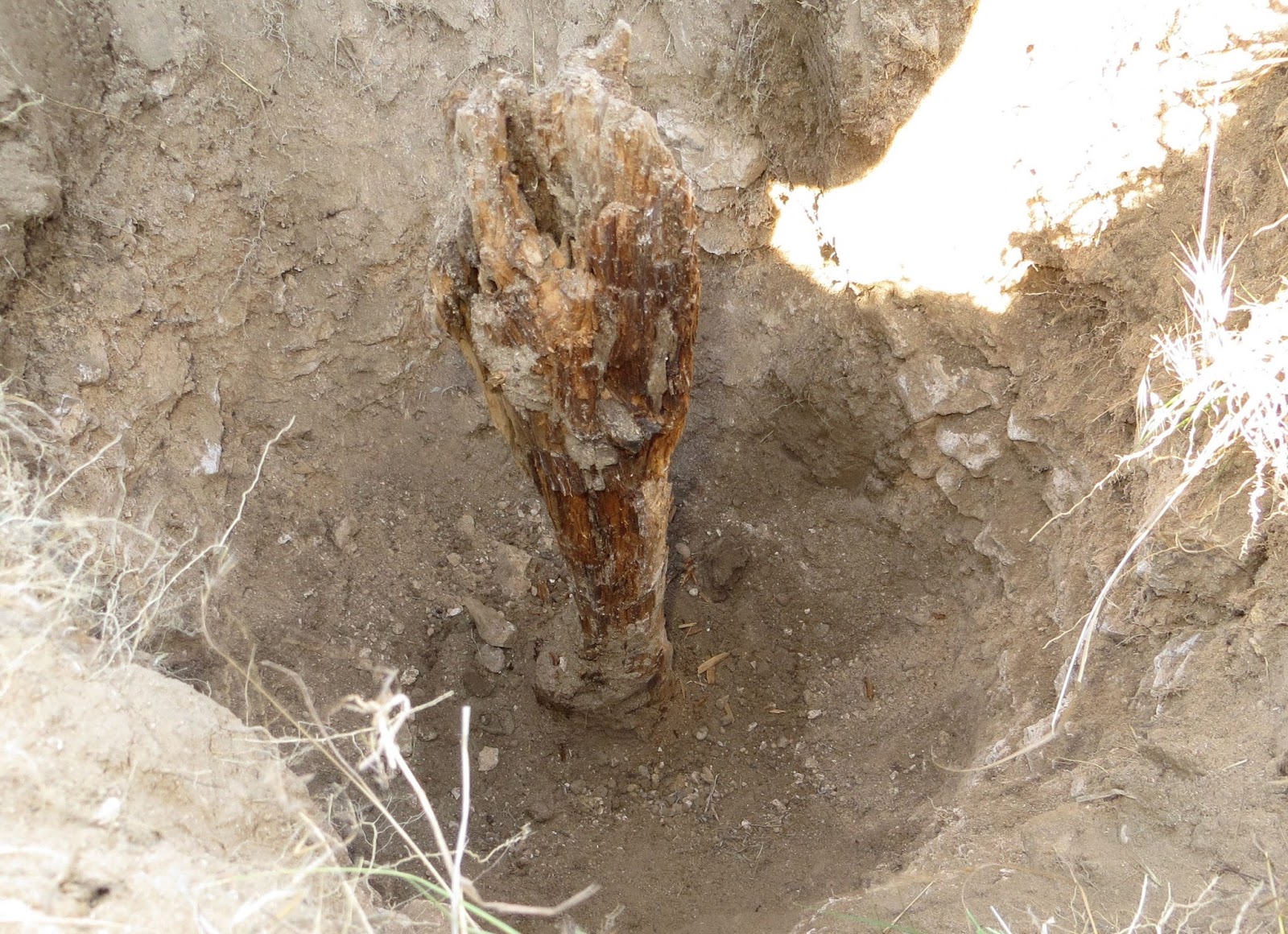
Today's project was rebuilding a gate/brace post on a rocky knob down on the south unit. Over the winter the post snapped off right at ground level, offering a nice illustration of why you never use untreated posts.


As I began the chore I just wasn't feeling it. I felt slow and weary and tired. For no good reason. I'm finding that some days are like that and that's all there is to it.

I hurt, too.

Now I've got several old injuries that have hurt for years. Achilles tendon, formerly fractured elbow and leg, formerly dislocated shoulder, bits and pieces of metal in the chest wall and back of the not-formerly broken leg. That's fine, those things are supposed to hurt. I get that.

But a lot of the non-injured stuff hurts too. Frickin' joints. Some days they all hurt. Usually when there's work to do.

So anyway, I had to replace the rotted off post. It's an important part of the fence system, one of the two anchors of a half-mile of four-wire fence. As a nice bonus, it's located on a rocky hill, so it's not just a matter of digging a hole in soil. There's a thin skin of topsoil on that hill (as on most hills in this neck of the woods), overlaying a thick layer of decomposing siltstone. So sinking a 45-inch post hole means breaking up and extracting 44 inches of rock and sand.

I've got a hydraulic auger that mounts to the skid steer, but for a single post hole, or even a half-dozen post holes, it's just not time or cost effective. Hardened auger spades are $60 a pop and in rocky ground last about 2-3 holes.

All in all it's quicker and in many ways easier to use the digging bar and Armstrong Ph.D.
"new" post, hole, digging bar, Armstrong Ph.D.

Of course I couldn't just dig the hole, either, because there was a whacking great piece of rotting fence post in the way, and that had to come out first.


Oh, I got it done all right. But the chore that had taken me 90 minutes to do a decade ago (when I installed the untreated post!) took closer to three hours today. It was a good workout. And now I'm waiting for the naprosyn/aspirin/tylenol cocktail to work.


Please work!

For all my whining, though, it was a glorious experience. A perfect day weather wise, not too hot or humid or windy or sunshiny. And during my frequent rest breaks I had a magnificent view to contemplate. Including stemless hymenoxis and tenpetal blazingstar. Along with my pending demise.


I shouldn't complain so much. Few people in my age cohort can do what I do. For them, the failing body train wreck began long ago and many are confined to the recliner when not sitting down elsewhere.


Tuesday, July 5, 2016

Weather and the science of Liberty


It's a lovely, coolish early July morning as I write this, 72 degrees at 0630 with just a puff of westerly breeze, not more than 3-4 mph. Humidity stands at 49 percent and viz is all the way beneath 8/10 cloud cover with bases at about 4,500 feet AGL.
Remember this? January 5, 2016.
July 5, 2016. We're on the other side of the sun now!
I'm a touch grumpy this morning following last night's firework depredations. My friends and neighbors went all out, and launched a final, thunderous barrage just after midnight. Which is long past my bedtime, thus the grumpiness.

However, coffee and a pretty morning are slowly working their magic.

Coffee and pretty soon had me out hiking the south unit. My "work" excuse for the hike was of course grass scouting and cattle inspection. On foot and at a hiking pace I can easily see what grass the cattle are taking and how much. This tells me a lot and allows me to make better and more informed decisions about managing both cattle and grass asset.
Funny lookin' cows in that sweetclover.
Buffalo grass, green needle grass.
The same thing applies to inspecting cattle. On foot and at a walking pace I see more and am able to observe details that I'd probably miss with part of my brain concentrating on driving. More complete information makes for more informed and better decisions. At least in theory.


Of course a very large part of hiking vs driving, at least for me, is the great pleasure I take from hiking the prairie. Leaving aside cattle and grass management, the prairie is endlessly fascinating. No two days are the same, no two hikes are the same. In addition to the observational pleasure I take from hiking, I also take a great deal of pleasure from the exertion of the hike. It gets the blood pumping and blows out the cobs, as it were, and always makes me feel better, physically and mentally.

As I hiked along the coolness of the morning quickly gave way to early July warmth. The heat wasn't oppressive by any means, and there was a bit of a westerly breeze, so it was rather enjoyable.

June was a warm month here. Air temperatures ran about five degrees above the 122-year norm, and soil temperatures about 5-10 degrees above average. This on the heels of a May in which air and soil temperatures were cooler than average.


June precipitation was slightly above average at the ranch but pretty much dead normal in the surrounding area. We saw 2.98 inches at the ranch while the official county scorekeeper recorded 2.89 inches, compared to the 122 year average of 2.67 inches. Much of the remainder of the Panhandle and adjacent areas in northeast Colorado and southeast Wyoming have been drier this spring. The Panhandle average precipitation since April 1 stands at 7.5 inches, compared to the thirty-year norm of 7.9 inches, or about 95 percent of average. On the ranch we're at 9.66 inches since April 1, or about 122 percent of average.

Having all that moisture in the soil is quite nice. Cool season grasses are leggy and abundant. We've got western wheatgrass as much as 30 inches tall, and green needlegrass a full 36 inches tall. It's also a sweetclover year, and some of that is taller than my head! Warm season grasses are surprisingly tall as well, with buffalo grass approaching nine inches and blue grama 18 inches. Forbs are equally robust and the scenery is awash with summer color.


Abundant plant biomass means abundant wildlife as well, from birds


to insects


to mammals to reptiles.
See him?
Now?
##########

The large scale weather pattern is presently changing, with ENSO (El Niño Southern Oscillation) moving from El Niño to La Niña. What this means in the far, equatorial Pacific is that water temperatures and barometric pressures are changing by tiny increments. What it often means here on the High Plains is that we’re moving from a period of abundant-to-adequate precipitation to a period of less precipitation.


Last year, when ENSO was well established in the El Niño pattern, the Panhandle’s average precipitation remained well over 100 percent of normal. With the shift toward La Niña, we’re already seeing less precipitation, and since April 1 of this year the Panhandle average has fallen below 100 percent of normal overall.


None of this is new. We live in a semi-arid climate zone, and this part of the world has seen routine wet and dry periods for at least the last 13,000 years. Only a couple of years ago, as 2011 began to fade, we moved from wet to very dry, cringed throughout the 2012 drought, and rejoiced when precipitation began to pick up again in 2013.

Are we presently heading for a drought? It’s possible, but it’s also impossible to know for certain. If you’re in it for the long haul, and most farmers and ranchers are, these precipitation variations are part of the great tapestry of life. We enjoy the good years and endure the dry years.


##########

Tim Ferris wrote a book some years back called The Science of Liberty: Democracy, Reason and the Laws of Nature.

Now if you're a person like me, one who comes to both science and Americanism through reason and rigor, you can't help but be grabbed by a title like that.

Science, the method of understanding what is, where the foundational principle is that falsifiable evidence is the final word. The most beautiful theory, said Thomas H. Huxley (more or less), can be killed by an ugly fact.


Americanism, the method of ensuring individual liberty, where the foundational principle is that all men are created equal and endowed with natural rights.

Two great tastes that go great together.

In science, you may construct a beautiful and elegant theory describing why helium is heavier than air, or why the bumblebee cannot fly. Yet your theories crumble to dust in the face of a rising balloon or a buzzing bee.

In Americanism, you may construct a beautiful and elegant theory describing why some men are more equal, or why some men are less equal. Yet your theories crumble to dust in the face of more equal and less equal people who are, nevertheless and without question, human beings.

In both cases you can argue passionately and endlessly and never, ever, make a dent in factual reality.

So Ferris, of whom I'd never (believe it or not) previously heard, made an astonishingly good case for the absolute requirement for American Liberty to be supported, if not driven by, real science. And for science to be supported and driven by American Liberty. Science that is honest and rigorous. American Liberty, where the foundational principle is that all men are created equal, and endowed with natural rights.

That was the first 260 pages. Then came the final chapter, where he pretty much said that honest, rigorous science and American Liberty must bow to the One World Solution For Global Warming. It's simply too important for honesty, too dangerous for facts. Superior, vastly more-equal people, like Ferris himself, have no choice but to lie to, cheat, and steal from the untermenschen. There's simply no other way to save the planet.

So. Global warming. Or if you prefer to use the language of Ferris and the rest of the ubermenschen, climate change. Here is the theory. Mankind is burning fossil fuels to produce energy, and in the process, releasing carbon dioxide into the atmosphere. Carbon dioxide is a greenhouse gas -- that is, it absorbs and holds heat. Therefore, man-made carbon dioxide is trapping heat in the atmosphere of our planet, causing temperatures to rise. Unless something reverses this process the planet will heat up until it is destroyed. I think it melts or something.

Here's the ugly fact that kills the theory, the real truth that is really inconvenient to the ubermenschen. The planet is not heating up.

For the theory to be true, the planet must be warming up. If it is not warming up, the theory is false. Period.

Below are three graphs of Kimball, Nebraska temperature data from the last 122 years. Highest maximum temperature by year, lowest minimum temperature by year, and mean average temperature by year. These graphs are made from raw temperature data. About six years of data are missing, from roughly mid-1912 through 1918. One of the nice things about this data set is that it begins at pretty much the beginning of the expansion of the industrial revolution, about the time fossil fuel burning really began to hit its stride around the globe. About the time theoretical carbon dioxide emissions began to destroy the planet.


If the planet were heating up, Kimball would be heating up. There would be a clear upward trend on the graph. Take a look. You don't even need a close look. For the theory to be true, the planet must be warming up. If it is not warming up, the theory is false. Period.

I know, I know. The heat is hiding just now, deep in the ocean and far above in the sky. And it's lurking. Just waiting for someone to tell it that it's at the magical tipping point. Then it will attack!

##########

You may recall hearing that February, 2016 was the hottest February the planet has ever seen. This was reported as absolute evidence that global warming is happening, as proof of the theory that fossil fuel burning is increasing atmospheric carbon dioxide which is trapping heat in the atmosphere which is causing global temperatures to rise which will soon melt the Earth and prevent the production of cheetos. Everybody, and I do mean everybody, agrees. It's a consensus. February, 2016 was the hottest February of all time, and that means the tipping point is nigh!

Below are three graphs of February temperatures at Kimball, Nebraska for the last 122 years. Highest maximum February temperature by year. Lowest minimum February temperature by year. Mean average February temperature by year.


Did Kimball see its highest February temperature in 2016? The February high for 2016 was 72 degrees. The highest February temperature recorded at Kimball in the last 122 years was 76 degrees, in 1962. In fact, 2016 saw the eighth highest February temperature since 1893, and that was a four-way tie with 1950, 1954, and 1958.

Did Kimball see its highest February low temperature in 2016? The highest February low temperature for 2016 was 30 degrees. Sixteen of the last 122 Kimball Februaries have had the same 30 degree, highest low temperature for the month. Eighty-one of the last 122 Kimball Februaries have had a warmer, highest low temperature for the month.

Did Kimball see its highest February average mean temperature in 2016? The February average mean temperature for 2016 was 33.9 degrees. The highest February average mean temperature recorded at Kimball in the last 122 years was 39.8 degrees, in 1954. In fact, 2016 saw the twenty-fourth highest February average mean temperature since 1893, a two-way tie with 1977.

What Kimball saw in February, and what the rest of the world saw in February, was a pretty normal month, temperature wise. Doubtless there were locations that were warmer than average, just as there were locations that were cooler than average.

So how is it that February, 2016, was universally reported as the hottest February of all time?

Well... The reporting agencies were NOAA and NASA. What they failed to mention, or perhaps mumbled under their breath, or only included in the supplemental notes, was that they only looked at the period of 1959-2016, and then only at the data that they had "scientifically smoothed."

What, you might wonder, is "scientific smoothing?" 

It's what you and I would call lying. They changed all the numbers that didn't agree with February 2016 being the hottest month of all time.

So there you go. The science of liberty. Yay.


Thursday, June 30, 2016

O.M.G.! A Terrible Awful Horrible Natural Disaster!


I know, I'm too mean about the tee-vee news. But I mean well. And what I mean is that this should be the look on your face (your faces, eh?) every single time you watch the tee-vee news.


EVERY TIME!

We had a real wuss of a very mild thunderstorm last evening. According to the tee-vee news it was a disaster of epic proportions!

http://www.nbcneb.com/scottsbluff/content/news/Powerful-storms-demolish-two-buildings-in-Kimball-384960571.html

I tried to embed that but I'm too stupid to figure it out. The thrust of the (can't think of a good enough word) story is that we Kimball Folk barely avoided death at the hands of Terrible Awful Horrible Natural Disaster last night.

#SMH #FacePalm #PleaseShootMe #GagMeWithAShovel #TheyShootHorsesDon'tThey

Anyway...

The #megatsunamiendoftheworldstorm lasted 23 minutes. There were four (possibly five!) claps of thunder. We got just over half an inch of rain, accompanied by a light smattering of pea-sized hail.

There was a single gust of wind clocked at 47 mph. That gust was enough to knock down a pair of three-sided, lightly constructed pole sheds. When I say three-sided, I mean roofed pole sheds with walls on three sides, open on the fourth side. These sheds were built about like a kids "fort." Light wooden frames with metal sheathing nailed on. Such structures are not uncommon around here. They provide temporary shelter for a few years, then get blown to flinders when a wind gust hits them just right.

Now you might be saying to yourself, "Well, that's Nebraska, lots of morons there, what do you expect?"

You might even be right.

Or, perhaps I'm right when I surmise that all of the tee-vee news is just as hyped, sensationalized, overblown, disingenuous, and outright dishonest.

Are you sure the news you watch is honest and objective?

Are you really sure?

I mean, you know these people lie about everything, all the time, right?

I guess I don't really know what else to say.

Took the picture this morning on the south unit while I was scouting grass. If I didn't have a place of refuge in the real world, a place to flee to from the land of the loonytune, I'm quite sure I'd just cut my throat.

In other news, the #veryaveragerainfall from the #veryvanillastorm put us #DeadNormalPrecipForJune.

That is all.

Monday, June 27, 2016

Someday, 1969


This, I think, is a real gem. It's a BBC film done in 1969 featuring members of 501 Squadron, RAF, 29 years after the Battle of Britain. I get the sense that it was made in part as a foil to the movie "Battle of Britain" which was released that same year.

I find the time dimension fascinating. It was 29 years after the fact then, and it's now 46 years later. These men were in the prime of their lives in 1969. Today they are almost certainly all gone. Even the young woman presenter, Gillian Strickland, has gone.

The fellow who really grabs my attention in this film is Ginger Lacey. He had 20 years left in 1969, and a daughter who was a mushroom-hunting companion who was likely just a bit younger than me. I wonder what her life has been?

Sunday, June 26, 2016

Red Dog


Originally published June 26, 2016.

##########

I think I wrote about Red a while back.

She's a four year-old Border Collie, quite a good cow dog, and just a very nice dog overall. In March she had an infection in the tissue of her chest. At that time she'd been sick for a month or so (or so we thought) and hadn't healed up on her own, despite an exam and wound cleaning by the vet and a big dose of long lasting injectable antibiotic.

She'd been in a fight and at the time we thought that that's how she got injured in the first place.

As it turns out, that probably wasn't it.

Anyway, we tried just about everything short of surgery. Antibiotics to the tune of about $700. X-Rays. Twice daily irrigation. She'd get better and the wounds would nearly heal, then they'd open back up and start weeping again.

On Thursday she took a turn for the worse. She was quite droopy and lethargic, had a fever, wouldn't eat. And the wound discharge changed color and gained a foul odor.

So she was starting to get septic, and that would almost certainly kill her. The only hope was surgery.

Which we did on Friday.


Yep, that's a five-inch stick. It was lodged in the muscles of her chest along the sternum.

Your guess is as good as mine. Obviously she ran into a tree branch and snapped the thing off in her chest.

Kind of icky-horrible to think about. May have happened as long ago as November.

In a way though I was happy as hell when we found that thing, because we'd found the problem -- gruesome as it was -- and now she would get better. I'd been afraid it was some mystery bug and that I'd have to put her down.

Oh, you should have seen her coming out of the anesthesia. I almost took some video but I just couldn't do it. But man, she looked a lot like a sailor trying to make the last liberty boat.

She's pretty sore and hanging out in the house a lot, but she's on the mend and will soon be back in business.


##########

Be well and embrace the blessings of liberty.